When investors discuss the “green transition” or sustainable finance, the conversation is overwhelmingly terrestrial. We debate the merits of land-based solar farms, the electrification of highway transportation, and the development of precision agriculture to feed a growing population.
Yet, this terrestrial focus ignores the Earth’s largest and most critical ecosystem: the ocean. Covering over 70% of the planet’s surface, the ocean is the primary regulator of the global climate, the primary source of protein for over 3 billion people, and the highway for 90% of global trade.
Historically, the economic relationship between humanity and the ocean has been purely extractive - overfishing, deep-sea drilling, and treating the ocean floor as an infinite dumping ground for plastics and agricultural runoff. However, a new paradigm is emerging, driven by a coalition of institutional investors, conservationists, and sovereign wealth funds. It is called the “Blue Economy.”
In this deep dive, we will define the parameters of the Blue Economy, explore the novel financial instruments being deployed to fund ocean conservation, and analyze the deep-tech startups attempting to reverse decades of marine degradation while generating alpha for investors.
Defining the Blue Economy
The term “Blue Economy,” popularized by organizations like the World Bank, does not simply refer to any economic activity taking place in the ocean. It specifically refers to the sustainable use of ocean resources for economic growth, improved livelihoods, and jobs, while preserving the health of the ocean ecosystem.
This distinction is crucial. A massive fleet of industrial trawlers illegally strip-mining a marine sanctuary is the “ocean economy,” but it is the antithesis of the Blue Economy. The Blue Economy encompasses several massive, interconnected sectors:
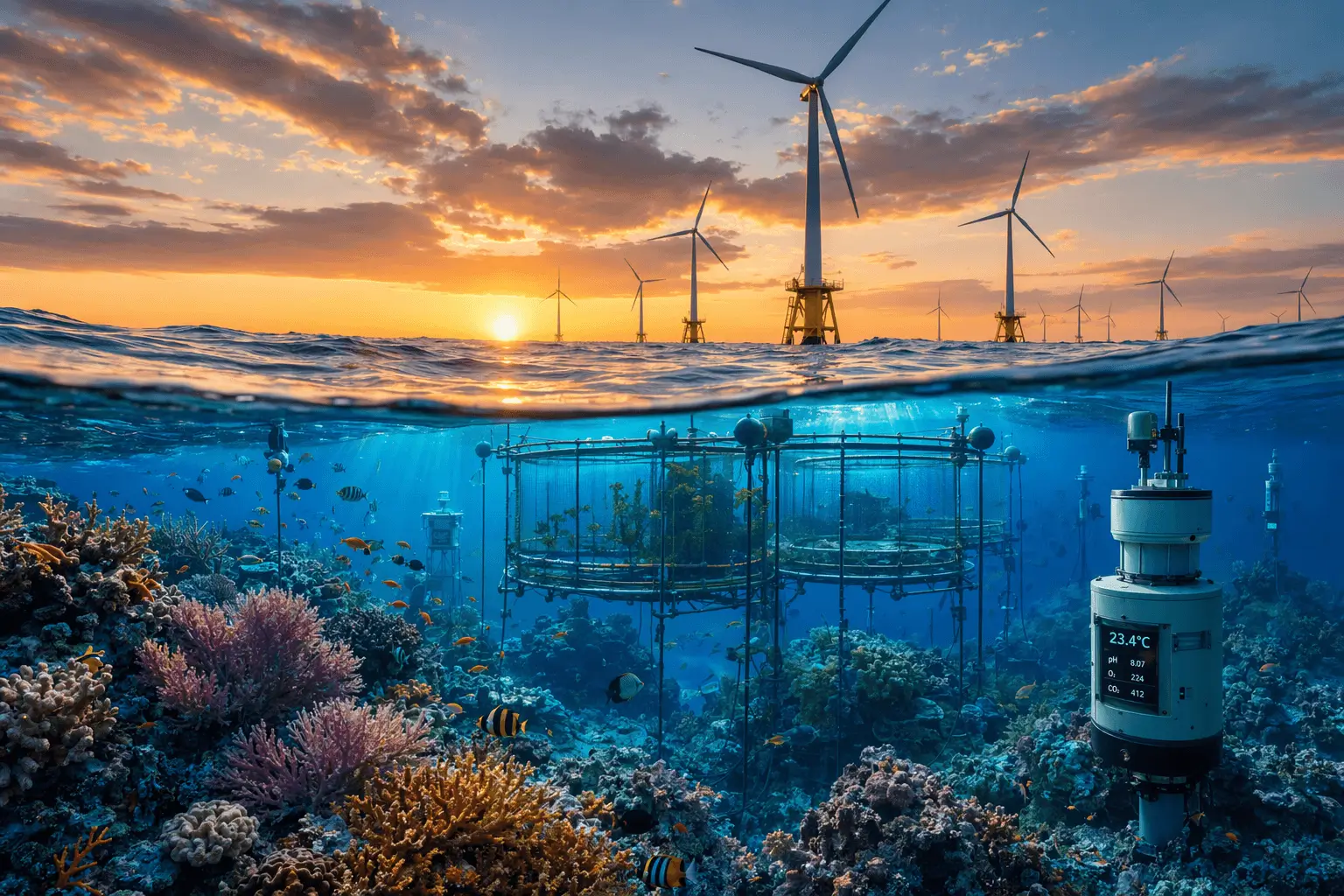
- Renewable Energy: Offshore wind, wave, and tidal energy.
- Sustainable Seafood: Traceable wild-caught fisheries and highly regulated, low-impact aquaculture.
- Maritime Transport: The decarbonization of global shipping fleets.
- Coastal Tourism: Eco-tourism that actively funds local conservation efforts.
- Marine Biotechnology: Harvesting oceanic compounds for pharmaceuticals and cosmetics.
The Financial Engine: Blue Bonds and Impact Investing
The primary obstacle to achieving a sustainable ocean has always been financing. Conservation was historically viewed as a philanthropic endeavor, reliant on unpredictable donations to NGOs like The Ocean Foundation.
The revolution of the Blue Economy lies in its financialization. It applies the rigorous structures of Wall Street to marine conservation, proving that ecological restoration can be a profitable, scalable asset class.
The Rise of the “Blue Bond”
Following the explosive success of “Green Bonds” (debt issued to fund terrestrial climate projects), governments and corporations are now issuing “Blue Bonds.”
A sovereign nation with massive coastal territories (like the Seychelles or Belize) can issue a Blue Bond to global investors. The nation uses the capital raised to pay off highly expensive, legacy national debt. In exchange for this debt restructuring (often guaranteed by international development banks to lower the interest rate), the nation legally commits to protecting a massive percentage of its exclusive economic zone (EEZ) as a “no-take” marine sanctuary and funding sustainable fisheries management.
For the institutional investor, the Blue Bond offers a stable, government-backed financial return while simultaneously fulfilling their ESG (Environmental, Social, and Governance) investment mandates.
Venture Capital and Ocean-Tech
Beyond sovereign debt, traditional venture capital is aggressively moving into the space, funding a wave of “ocean-tech” startups. These startups are addressing the most complex challenges of the Blue Economy:
- Alternative Feeds for Aquaculture: Traditional salmon farming is highly inefficient because farmed salmon are fed wild-caught fish meal (anchovies and sardines), depleting the base of the marine food web. Startups are engineering alternative proteins - using black soldier flies or synthetic algae - to feed farmed fish, entirely decoupling aquaculture from wild fish stocks.
- Autonomous Ocean Data: We know more about the surface of Mars than we do about the deep ocean. Fleets of autonomous, solar-powered aquatic drones are being deployed to map the ocean floor, monitor illegal fishing via satellite tracking, and provide real-time data on ocean acidification and temperature shifts. This data is critical for pricing climate risk in global financial markets.
The Decarbonization of Maritime Shipping
Perhaps the most economically significant, yet least visible, sector of the Blue Economy is maritime shipping. The global supply chain relies entirely on massive cargo ships burning “bunker fuel” - the thickest, dirtiest, and cheapest byproduct of the oil refining process. If the global shipping industry were a country, it would be the sixth-largest emitter of greenhouse gases in the world.
The Transition to Green Fuels
Decarbonizing this sector is a monumental engineering and economic challenge. You cannot simply put heavy lithium-ion batteries on a cargo ship crossing the Pacific; the batteries would weigh more than the cargo.
Instead, the maritime industry is investing billions into developing alternative fuels, specifically Green Ammonia and Green Methanol. These fuels can be produced using renewable energy and burn with zero carbon emissions. However, they require entirely new engine designs and a massive, global overhaul of port bunkering infrastructure.
The Regulatory Whip
This transition is not being driven purely by corporate goodwill; it is being forced by regulation. The International Maritime Organization (IMO) has implemented strict, escalating limits on the sulfur content of marine fuels and has set aggressive targets for total industry decarbonization by 2050. Shipping companies that fail to adopt cleaner technologies will face crippling carbon taxes and may be entirely barred from entering European or North American ports, creating a massive financial incentive to innovate.
The Controversy: Deep Sea Mining
The most contentious issue within the Blue Economy is the impending reality of Deep Sea Mining. As we discussed in our exploration of space mining feasibility, the global transition to renewable energy requires staggering amounts of cobalt, nickel, copper, and manganese.
The deepest, most remote areas of the ocean floor, particularly the Clarion-Clipperton Zone in the Pacific, are covered in “polymetallic nodules” - potato-sized rocks incredibly rich in these exact battery metals.
Mining companies argue that vacuuming these nodules off the barren ocean floor is far more environmentally sustainable than tearing down rainforests in Indonesia or utilizing child labor in terrestrial cobalt mines. Conservationists counter that deep-sea ecosystems are incredibly fragile, and deploying massive robotic tractors to strip-mine the ocean floor will create massive sediment plumes, permanently destroying ancient, undiscovered ecosystems and disrupting the ocean’s ability to sequester carbon.
This debate highlights the brutal, inherent contradictions of the green transition. Building a sustainable future requires vast amounts of raw materials, and the extraction of those materials will inevitably cause ecological damage, forcing policymakers to choose between the lesser of two severe environmental evils.
Conclusion: Pricing the Invaluable
The Blue Economy represents a profound shift in how capitalism interacts with the natural world. For centuries, the ocean was viewed as an infinite resource with zero balance-sheet value.
The financialization of the ocean - through Blue Bonds, carbon credits for “Blue Carbon” (mangroves and seagrasses), and strict regulatory pricing on maritime emissions - is finally assigning a monetary value to a healthy, functioning marine ecosystem. While the challenges of enforcement, technological scaling, and the looming specter of deep-sea mining are immense, the integration of oceanic sustainability into global capital markets is the only realistic pathway to protecting the blue heart of our planet.