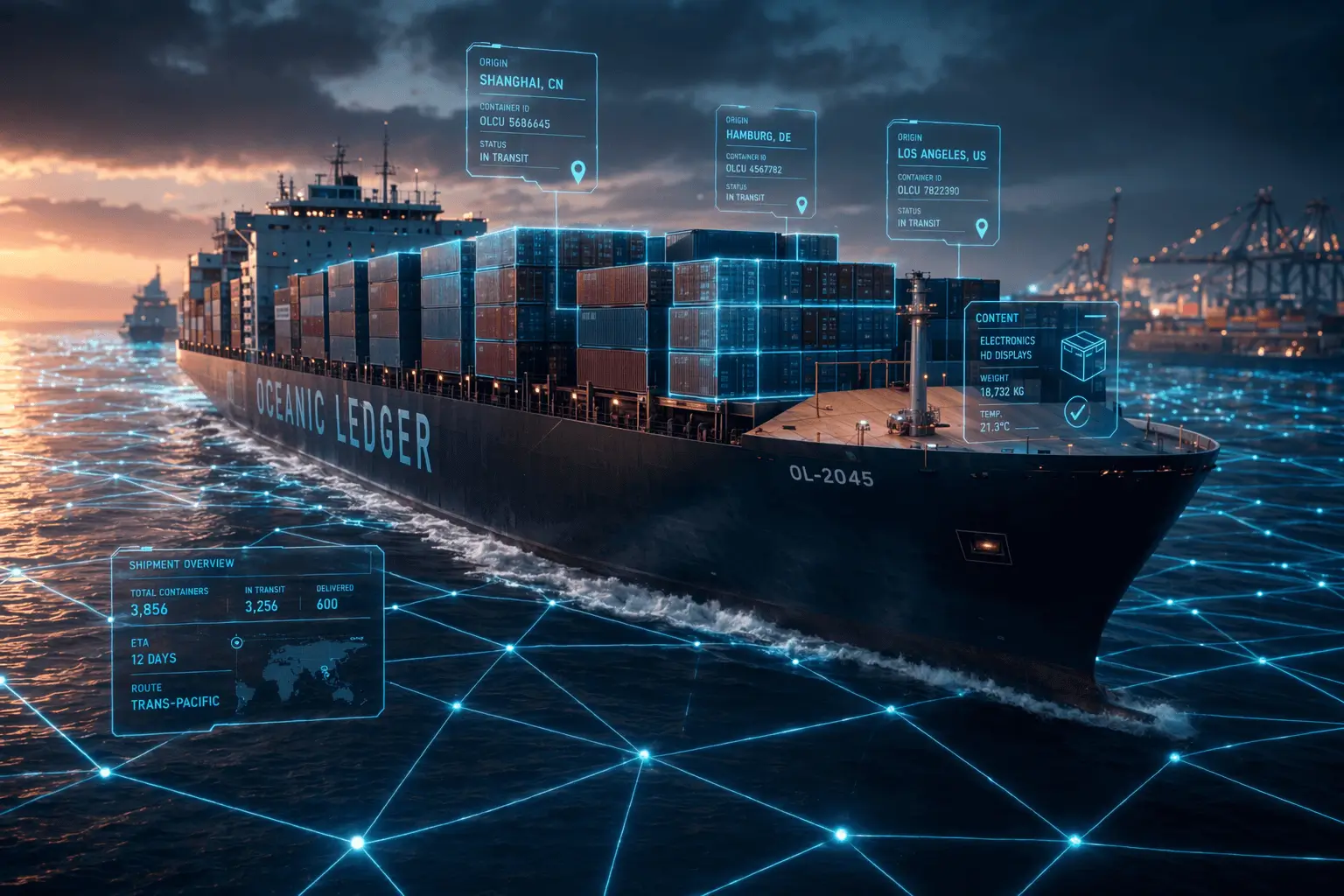
For decades, the global supply chain has functioned as an intricate, sprawling, and fundamentally opaque network. Moving a single product - from the extraction of raw materials in South America to a manufacturing plant in Asia, and finally to a retail shelf in Europe - involves dozens of independent entities. Manufacturers, freight forwarders, port authorities, customs agents, insurers, and distributors all operate within this complex web.
The primary friction in this system is a profound lack of trust and interoperability. Each participant maintains their own separate ledger. When a shipping container changes hands, data must be reconciled across these disconnected databases, often relying on physical paperwork, disparate software systems, and manual verification. This fragmentation results in immense inefficiencies, pervasive fraud, and an inability to rapidly trace products during crises.
However, a technological revolution is underway. Blockchain - the same distributed ledger technology that underpins Decentralized Finance (DeFi) - is being deployed to create a shared, immutable, and transparent record of truth for global logistics. This is not merely an incremental upgrade; it is a fundamental restructuring of how physical goods move around the planet.
The Anatomy of Supply Chain Friction
To understand the transformative power of blockchain, we must first diagnose the crippling inefficiencies of the legacy system. The modern supply chain suffers from three core ailments: information silos, the burden of paperwork, and the prevalence of counterfeiting.
Information Silos and the “Bullwhip Effect”
Because each entity in a supply chain maintains its own proprietary database, visibility is strictly limited. A retailer may know when a shipment arrives at their distribution center, but they rarely have real-time insight into the status of the raw materials at the very beginning of the chain.
This lack of visibility leads to the “bullwhip effect,” where small fluctuations in retail demand cause massive, exaggerated swings in manufacturing production and inventory stockpiling upstream. Without a single source of truth, companies are forced to hold excess “just-in-case” inventory to buffer against uncertainty, tying up billions of dollars in working capital.
The Paperwork Burden
Astonishingly, a significant portion of global trade still relies on physical documents. A single international shipment of refrigerated goods can require over 200 different communications and physically stamped documents - bills of lading, certificates of origin, customs declarations, and health certificates.
If a single piece of paper is lost, delayed, or contains a clerical error, the entire shipment can be halted at a port, resulting in spoiled goods, demurrage charges, and catastrophic delays. The administrative overhead required simply to process this paperwork constitutes a massive hidden tax on global trade.
Counterfeiting and Provenance
In industries ranging from luxury goods to pharmaceuticals, counterfeiting is a multi-billion dollar problem. When supply chains are opaque, malicious actors can easily inject fake products into the system. Furthermore, ethical sourcing has become a massive consumer demand. When a brand claims its coffee is “fair trade” or its diamonds are “conflict-free,” the legacy supply chain rarely offers a way to definitively prove that provenance to the end consumer.
Enter the Blockchain: A Single Source of Truth
Blockchain technology addresses these fundamental flaws by providing a decentralized, immutable ledger that is accessible to all authorized participants in the network.
How it Works in Logistics
Imagine a shipping container of high-value pharmaceuticals leaving a facility in Switzerland bound for the United States. In a blockchain-enabled supply chain, every significant event in that container’s journey is recorded as a “block” on the ledger.
When the pallets are loaded, a block is created. When the container is transferred from the truck to the cargo ship, the shipping company digitally signs a new block. IoT sensors inside the container constantly monitor the temperature; if the temperature deviates from the required range, an automated alert is instantly recorded on the blockchain. When the container arrives at U.S. customs, the agents can instantly view the entire, unalterable history of the shipment - where it came from, who handled it, and the environmental conditions during transit.
The Eradication of Discrepancies
Because every participant is looking at the exact same ledger, reconciliation errors are effectively eliminated. If a supplier claims they shipped 10,000 units and the distributor claims they only received 9,500, the blockchain provides an indisputable record of the transfer of custody. This shared truth drastically reduces the time and legal costs spent resolving disputes.
Smart Contracts: Automating Trust
The integration of smart contracts elevates blockchain from a passive record-keeping system to an active automation engine. As discussed in our analysis of AI agents, the automation of complex business logic is a defining trend of this decade. In the context of supply chains, smart contracts automatically execute predefined actions when specific conditions are met.
Automated Payments and Escrow
Consider the complex financial arrangements required for international trade. Traditionally, companies use Letters of Credit issued by banks to guarantee payment - a slow and expensive process.
With a smart contract, the payment process can be entirely automated. The funds are placed into a digital escrow. The smart contract is programmed to monitor the blockchain; the exact moment the shipping container is scanned and accepted at the destination port, the smart contract automatically releases the funds to the supplier. This dramatically accelerates cash flow, eliminates the need for expensive banking intermediaries, and removes the counterparty risk of non-payment.
Dynamic Insurance and Risk Management
Marine and transit insurance can also be revolutionized by smart contracts. If the IoT sensors within our hypothetical pharmaceutical container record a temperature spike that renders the drugs unusable, the smart contract can immediately and automatically trigger an insurance payout to the owner, without the need for a lengthy claims investigation. The immutable data on the blockchain serves as irrefutable proof of the event.
Provenance and the Consumer Experience
Perhaps the most visible impact of blockchain in logistics will be experienced by the end consumer. As consumers demand greater transparency regarding the ethical and environmental origins of their products, brands are utilizing blockchain to prove their claims.
From Farm to Fork
In the food industry, companies like Walmart and IBM (through the Food Trust initiative) are using blockchain to track produce from the farm to the grocery store shelf. If an outbreak of E. coli occurs, health authorities no longer need weeks to trace the contaminated lettuce back to its source. Using the blockchain, they can identify the exact farm, processing plant, and shipment in a matter of seconds, allowing for highly targeted recalls rather than widespread, wasteful disposal.
Ethical Sourcing and Luxury Goods
Similarly, luxury brands are using blockchain to combat counterfeiting and prove the authenticity of high-end items. A diamond can be assigned a digital twin on a blockchain at the moment it is mined, tracking its journey through cutting, polishing, and setting. When a consumer purchases the diamond, they can scan a QR code to view its entire, verified history, guaranteeing its authenticity and ethical sourcing.
This level of transparency is becoming a competitive necessity, especially as global tariff shifts and trade tensions force companies to constantly re-evaluate and justify their global sourcing strategies to both regulators and consumers.
Challenges to Implementation
Despite the overwhelming benefits, the transition to blockchain-enabled supply chains is not without significant hurdles.
The Interoperability Dilemma
Currently, the market is fragmented. Different consortiums are building their own proprietary or semi-private blockchains. If Maersk uses one blockchain standard and a major port authority uses another, the ecosystem remains siloed. For the true value of blockchain to be realized, the industry must develop open standards that allow different networks to communicate seamlessly, much like the TCP/IP protocols that enable the internet.
The “Garbage In, Garbage Out” Problem
A blockchain can guarantee that data has not been altered after it was entered, but it cannot guarantee that the data was truthful when it was first recorded. If a malicious actor fraudulently scans a QR code indicating a shipment of organic cotton, when it is actually synthetic, the blockchain will immutably record a lie.
Solving this requires a tight integration between the physical and digital worlds. This is where the integration of “crypto-anchors,” advanced IoT sensors, and biometric verification becomes critical. The physical transfer of the asset must be securely tied to the digital signature on the ledger.
Change Management and Institutional Inertia
Finally, the biggest hurdle is human, not technological. Moving to a shared ledger requires fierce competitors to collaborate and share data. It requires customs agencies to update decades-old legal frameworks to recognize digital bills of lading. Overcoming this institutional inertia and fostering a culture of data collaboration is a monumental challenge.
Conclusion: The Backbone of Global Trade
The global supply chain is too complex, too vital, and too fragile to remain reliant on fragmented databases and paper documents. The COVID-19 pandemic and subsequent geopolitical shocks have starkly highlighted the need for agility, transparency, and resilience in how we move goods around the world.
Blockchain technology is not a panacea for all logistical woes, but it provides the essential digital infrastructure required to solve them. By establishing a single, immutable source of truth, automating trust through smart contracts, and providing unprecedented visibility from raw material to retail shelf, blockchain is poised to become the new backbone of global trade. The companies that embrace this transparent, collaborative architecture will secure a massive competitive advantage in the decades to come.