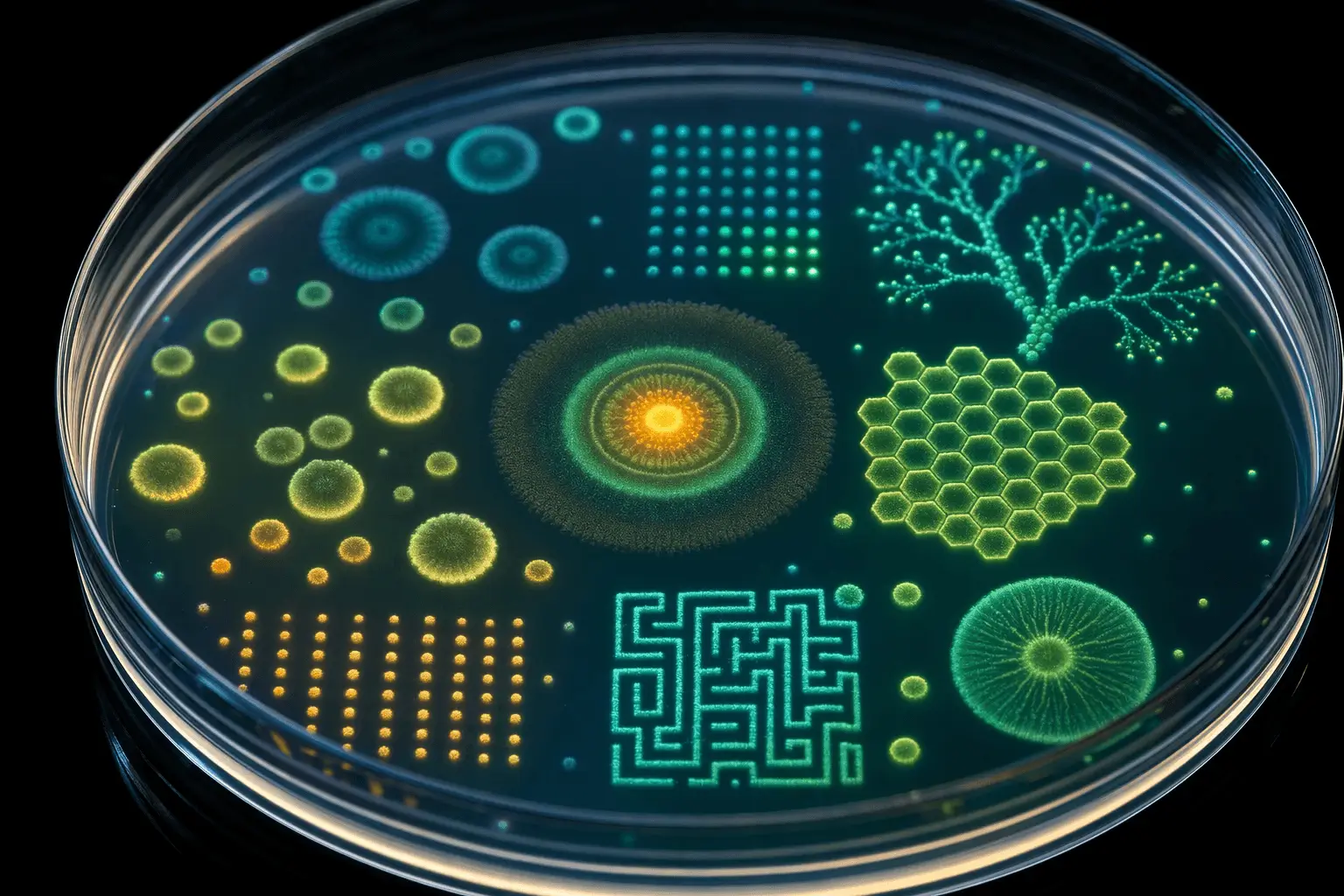
For the past seventy years, the global economy has been primarily driven by two foundational technologies: the manipulation of electrons (silicon-based computing) and the extraction of hydrocarbons (the petrochemical industry). These technologies brought us the internet, modern medicine, and globalized supply chains, but they also brought us an escalating climate crisis and fragile geopolitical dependencies.
Today, a third foundational technology is rapidly maturing, one that has the potential to eclipse both silicon and oil in its economic impact: Synthetic Biology (SynBio). Synthetic biology is the application of engineering principles to the fundamental components of biology. It is the ability to read, write, and execute DNA as if it were computer code, effectively turning living cells into microscopic, highly efficient manufacturing plants.
This is not science fiction. The commercialization of synthetic biology is happening right now, attracting billions of dollars in venture capital and capturing the attention of the world’s largest industrial conglomerates. In this deep dive, we will explore the underlying technologies making this possible, the massive industries poised for disruption, and the profound economic implications of a world where we “grow” our products instead of drilling for or mining them.
The Technological Stack of SynBio
To understand the business potential of synthetic biology, one must understand how the technology has evolved. Historically, genetic engineering was a slow, bespoke, and highly error-prone process. A scientist might spend years trying to insert a single gene into a bacterium. Today, the process resembles an industrial assembly line, powered by a rapidly advancing “tech stack.”
Reading DNA: The Sequencing Revolution
The first requirement for programming biology is the ability to read the existing code. The Human Genome Project, completed in 2003, cost roughly $3 billion and took over a decade. Today, thanks to Next-Generation Sequencing (NGS) technologies pioneered by companies like Illumina, you can sequence a human genome in a matter of hours for a few hundred dollars. This exponential decrease in the cost of sequencing - falling much faster than Moore’s Law in computing - has created massive databases of biological code, providing the raw materials for synthetic biologists to study and utilize.
Writing DNA: Synthetic Genomics
If sequencing is “reading,” then DNA synthesis is “writing.” Synthetic biologists do not just edit existing genes; they design entirely new genetic sequences on a computer and then use specialized machines to physically “print” the DNA. Companies like Twist Bioscience are manufacturing synthetic DNA at scale, allowing researchers to order custom genetic sequences as easily as one might order a custom physical part from a 3D printing service.
Editing DNA: The CRISPR Breakthrough
The discovery and refinement of CRISPR-Cas9 technology was the final catalyst for the SynBio revolution. CRISPR acts as a pair of highly precise molecular scissors, allowing scientists to insert, delete, or modify specific sequences of DNA within a living cell with unprecedented accuracy. It transformed genetic engineering from a clumsy, brute-force endeavor into a precise editing process.
The Orchestration Layer: Bio-Foundries
The true industrialization of SynBio relies on “bio-foundries.” These are massive, highly automated laboratories that utilize robotics, machine learning, and advanced liquid handling systems to test thousands of genetic variations simultaneously. Companies like Ginkgo Bioworks operate these foundries as platforms. Just as a software developer uses Amazon Web Services (AWS) to host their application without building a server farm, a company can use Ginkgo’s platform to design a custom microbe without having to build their own molecular biology lab.
The Industries Ripe for Disruption
The economic promise of synthetic biology lies in its incredible versatility. Because biology is the most advanced manufacturing technology in the known universe - capable of self-assembling complex structures at the atomic level - SynBio can theoretically disrupt any industry that relies on physical materials.
Agriculture and Food Production
The global agricultural system is incredibly resource-intensive, consuming massive amounts of land, water, and synthetic fertilizers. SynBio offers radical alternatives. Companies are engineering microbes that can fix nitrogen directly from the air, potentially eliminating the need for polluting synthetic fertilizers.
Furthermore, the “alternative protein” market is shifting from plant-based meat substitutes to “precision fermentation.” Companies are using engineered yeast to produce exact replicas of dairy proteins, egg whites, and animal fats without involving a single cow or chicken. This allows for the production of identical food products with a fraction of the environmental footprint, fundamentally threatening the traditional livestock industry.
Pharmaceuticals and Therapeutics
The pharmaceutical industry has already been heavily impacted by biotechnology, but SynBio is accelerating the pace of discovery. The rapid development of the mRNA COVID-19 vaccines was a massive triumph of synthetic biology; scientists effectively synthesized a piece of genetic code to instruct human cells to build a specific viral protein, triggering an immune response.
Beyond vaccines, SynBio is enabling the development of “living medicines.” Researchers are engineering immune cells to hunt and destroy specific types of cancer (CAR-T cell therapy) and designing bacteria that can reside in the human gut to continuously produce necessary enzymes for patients with rare metabolic disorders. The shift is moving from static chemical drugs to dynamic, programmable cellular therapies.
Advanced Materials and Manufacturing
Perhaps the most far-reaching application of SynBio is in the production of physical materials. The vast majority of our plastics, textiles, and chemicals are derived from petrochemicals. SynBio companies are engineering microbes to consume agricultural waste or even captured carbon dioxide and ferment it into bio-plastics, synthetic spider silk (which is stronger than steel), and industrial chemicals.
This ties directly into the booming investment in climate tech solutions. By decoupling material production from fossil fuel extraction, SynBio offers a pathway to a genuinely circular economy. If a company can brew a high-performance polymer in a vat rather than refining it from crude oil, the entire geopolitical calculus of resource extraction changes. This shift will force a massive reorganization of global supply chains, moving production closer to the end consumer and reducing reliance on vulnerable international shipping routes.
The Trillion-Dollar Economic Implications
The market projections for synthetic biology are staggering. Various prominent consulting firms, including McKinsey, estimate that the bioeconomy could have a direct economic impact of up to $4 trillion annually over the next ten to twenty years.
The Shift from Atoms to Bits
The economic paradigm of SynBio is unique because it digitizes the physical world. The value is no longer primarily in the raw materials, but in the genetic code - the intellectual property. A company in California can design a specific genetic sequence on a computer, email that digital file to a bio-foundry in Europe, where the DNA is printed and inserted into a local yeast strain to manufacture a product. The physical constraints of geography and natural resources are dramatically minimized.
The Commoditization of Hardware
As the bio-foundry model matures, we will likely see a commoditization of the physical “hardware” of biology (the fermentation tanks, the sequencing machines). The overwhelming majority of the economic value will accrue to the companies that own the “software” - the proprietary genetic designs and the machine learning algorithms used to discover them. Investors must understand that they are essentially evaluating software companies that happen to output physical molecules.
The Risks and Ethical Hurdles
Despite the immense promise, the path to a trillion-dollar bioeconomy is fraught with extreme risks and complex ethical dilemmas.
Scaling Up: The Physics of Fermentation
The biggest current bottleneck for SynBio companies is physical scale. It is one thing to engineer a microbe that produces a valuable chemical in a small test tube; it is entirely another to keep that microbe alive, happy, and productive in a 100,000-liter commercial fermentation tank. The physics of fluid dynamics, heat transfer, and oxygenation change drastically at scale. Many highly publicized SynBio startups have failed not because their biology was flawed, but because they could not transition from the lab bench to industrial manufacturing profitably.
Biosecurity and Regulation
The ability to easily read and write DNA introduces profound biosecurity risks. If we can engineer a virus to cure cancer, a bad actor could theoretically engineer a virus to cause unprecedented harm. The democratization of biological tools means that regulatory frameworks must evolve rapidly.
Currently, the regulatory environment is struggling to keep pace. Is a plant engineered via CRISPR considered a “Genetically Modified Organism” (GMO) if no foreign DNA was introduced? How do we regulate “living” medicines that replicate inside the patient’s body? These regulatory uncertainties present massive risks for investors. Top scientific journals like Nature frequently publish debates regarding the necessary governance structures required to safely scale these technologies.
The Public Perception Problem
Finally, SynBio faces a significant public relations hurdle. The public is often deeply skeptical of “playing God” with biology. The backlash against GMO crops in the early 2000s serves as a cautionary tale. If the SynBio industry fails to communicate the safety, efficacy, and environmental benefits of its products transparently, consumer rejection could severely stall commercial adoption.
Conclusion: The Century of Biology
We are standing at the precipice of the Century of Biology. The ability to program living cells with the same precision that we program computers represents a fundamental leap in human capability.
For investors, corporations, and policymakers, understanding synthetic biology is no longer optional. It is a foundational technology that will redefine how we heal our bodies, feed our populations, and manufacture the physical world around us. The companies that master the complexities of scaling engineered biology will not just build trillion-dollar industries; they will write the next chapter of human evolution.