For decades, the conversation surrounding climate change was primarily framed in terms of sacrifice, regulation, and philanthropic duty. Environmentalism was often positioned in direct opposition to economic growth. However, over the past five years, a profound paradigm shift has occurred within the global financial markets. Climate tech is no longer viewed merely as a moral imperative; it is now widely recognized as the single largest macroeconomic opportunity of the 21st century.
This transition is driven by a brutal reality: the planet is warming, the physical consequences are already disrupting global supply chains, and the necessary energy transition will require the complete rewiring of the modern industrial economy. Trillions of dollars of capital are currently being mobilized to fund this transition. This is not “cleantech 1.0” characterized by the solar panel busts of the early 2010s; this is a mature, multifaceted industrial revolution touching every sector from agriculture to heavy manufacturing.
In this comprehensive analysis, we will explore the major sub-sectors of climate tech, the structural market forces driving investment, the complex regulatory environment, and the significant risks involved in financing the future of our planet.
The Scope of Climate Tech: Beyond Just Solar Panels
When most people think of climate technology, their minds immediately go to solar panels, wind turbines, and electric vehicles (EVs). While renewable energy generation and electrified transport remain crucial foundational pillars, the modern climate tech landscape is vastly more expansive. It encompasses any technology designed to mitigate greenhouse gas emissions, remove existing carbon from the atmosphere, or help societies adapt to a permanently altered climate.
Deep Decarbonization of Heavy Industry
One of the most capital-intensive and critical areas of investment is the deep decarbonization of heavy industry. Cement and steel production alone account for roughly 15% of global carbon dioxide emissions. These are “hard-to-abate” sectors because the emissions are not just a byproduct of the energy used to heat the furnaces, but are often released by the chemical reactions inherent in the manufacturing process itself.
Startups and established industrial conglomerates are currently racing to commercialize “green steel” produced using green hydrogen instead of coking coal. Similarly, innovations in novel cement chemistries aim to inject captured carbon dioxide directly into the concrete curing process, effectively turning our built environment into a carbon sink. This industrial transformation is as complex as the restructuring of global supply chains we have seen in recent years.
Next-Generation Energy Storage
The fundamental flaw of renewable energy sources like wind and solar is their intermittency. The wind does not always blow, and the sun does not always shine. Therefore, grid-scale energy storage is the linchpin of a decarbonized future.
While lithium-ion batteries have revolutionized the EV market - a crucial component of the shift toward autonomous vehicle networks - they are often too expensive and resource-constrained for massive, long-duration grid storage. Investors are aggressively funding alternative chemistries, such as iron-air batteries, solid-state batteries, and mechanical storage solutions like compressed air and advanced pumped hydro. The company that can deliver reliable, multi-day grid storage at a fraction of the cost of lithium-ion will essentially own the future energy market.
Carbon Capture, Utilization, and Storage (CCUS)
Even under the most optimistic emissions reduction scenarios, the mathematical models published by the Intergovernmental Panel on Climate Change (IPCC) indicate that we must actively remove billions of tons of legacy carbon dioxide from the atmosphere to avoid catastrophic tipping points.
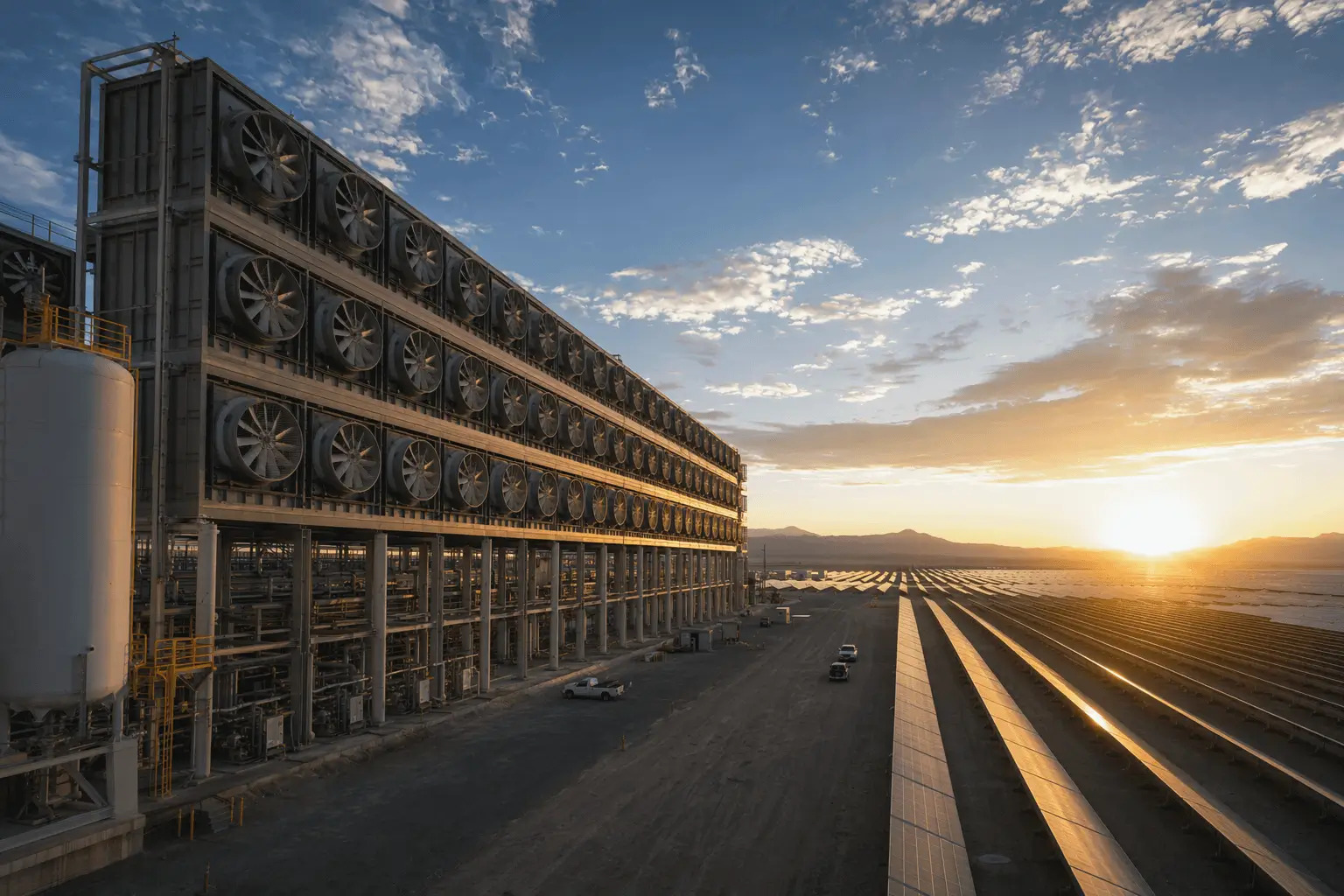
This has birthed the Direct Air Capture (DAC) industry. These are massive industrial facilities essentially acting as giant mechanical trees, using chemical sorbents to pull CO2 directly from the ambient air. Currently, DAC is prohibitively expensive - often costing several hundred dollars per ton of carbon removed. The investment thesis here relies heavily on “Wright’s Law”: the expectation that as deployment scales up, manufacturing efficiencies will drive the cost down, much like what happened with solar photovoltaics over the past two decades.
The Market Forces Driving the Boom
The current influx of capital into climate tech is not driven by altruism. It is propelled by a convergence of powerful, secular market forces that make the energy transition an economic inevitability.
The Plunging Cost Curve of Renewables
The most significant driver is simple economics. In many parts of the world, utility-scale solar and onshore wind are now the cheapest forms of new electricity generation, undercutting existing coal and natural gas plants. The narrative has shifted from “renewables are expensive but necessary” to “renewables are the most logical financial choice.” This economic tipping point changes the entire risk profile for institutional investors.
Regulatory Tipping Points and Subsidies
While pure economics are driving adoption, massive government intervention is acting as an incredible accelerant. The passage of sweeping legislation, such as the Inflation Reduction Act (IRA) in the United States and the European Union’s Green Deal, has permanently altered the investment landscape.
These policies provide hundreds of billions of dollars in tax credits, direct grants, and loan guarantees for climate tech manufacturing and deployment. By subsidizing the early-stage “green premium,” governments are de-risking investments for venture capitalists and private equity firms, triggering a massive influx of private capital alongside public funds. Initiatives like Breakthrough Energy, founded by Bill Gates, are specifically designed to bridge the gap between early-stage venture capital and massive infrastructure deployment.
Corporate Net-Zero Commitments
The third major driver is corporate pressure. Over the past few years, a significant percentage of the Fortune 500 has made legally binding or highly publicized commitments to achieve “Net-Zero” emissions by 2040 or 2050.
These are not just PR stunts; these commitments are increasingly tied to executive compensation and demanded by massive institutional shareholders like BlackRock and Vanguard. To fulfill these pledges, corporations must fundamentally alter their operations. They are signing massive Power Purchase Agreements (PPAs) for renewable energy, electrifying their vehicle fleets, and demanding low-carbon materials from their suppliers. This creates massive, guaranteed downstream demand for climate tech startups.
The Risks: Navigating the Green Bubble
While the macroeconomic tailwinds are unprecedented, climate tech investing remains incredibly perilous. It is fundamentally different from traditional software venture capital, requiring a unique understanding of hardware engineering, regulatory risk, and commodity markets.
The “Valley of Death” in Hard Tech
Software companies can often reach product-market fit and generate revenue with a few million dollars in seed funding. Climate tech, conversely, is heavily skewed toward “hard tech” - physical infrastructure, complex chemistry, and massive manufacturing facilities.
A startup developing a novel aviation fuel might need $100 million just to build a pilot plant to prove the chemistry works at scale, long before generating a single dollar of revenue. This massive capital requirement creates a notorious “Valley of Death” between the R&D phase and commercial deployment. Many promising technologies simply run out of money before they can prove their viability at an industrial scale.
The Threat of Regulatory Reversal
Because so much of the current climate tech economics relies on government subsidies and carbon pricing mechanisms, the sector is uniquely vulnerable to political shifts. A change in administration or a populist backlash against the cost of the energy transition can result in the sudden removal of critical tax credits. Investors must constantly assess not just the technological viability of a company, but its resilience to sudden regulatory shocks.
The Greenwashing Problem
Finally, the sheer volume of capital chasing “green” investments has led to a significant problem with greenwashing - companies exaggerating or fabricating their environmental impact to attract funding.
As ESG (Environmental, Social, and Governance) investing matures, regulators are cracking down heavily on unsubstantiated claims. Investors must employ rigorous, science-based due diligence to separate the companies creating genuine, measurable emissions reductions from those simply exploiting a marketing trend. If an investor backs a company that is later exposed for greenwashing, the reputational and financial damage can be severe.
Conclusion: The Ultimate Long-Term Play
The transition to a decarbonized global economy is the ultimate long-term investment play. It requires patience, massive capital reserves, and a tolerance for deep technical risk.
However, the potential rewards are commensurate with the challenge. The companies that successfully commercialize scalable climate technologies will not just generate massive financial returns; they will essentially build the foundational infrastructure for the next century of human civilization. We are moving from an economy built on extracting fossil fuels to an economy built on manufacturing advanced technology. Understanding the nuances of this transition is essential for any serious investor looking to navigate the markets of the 2020s and beyond.