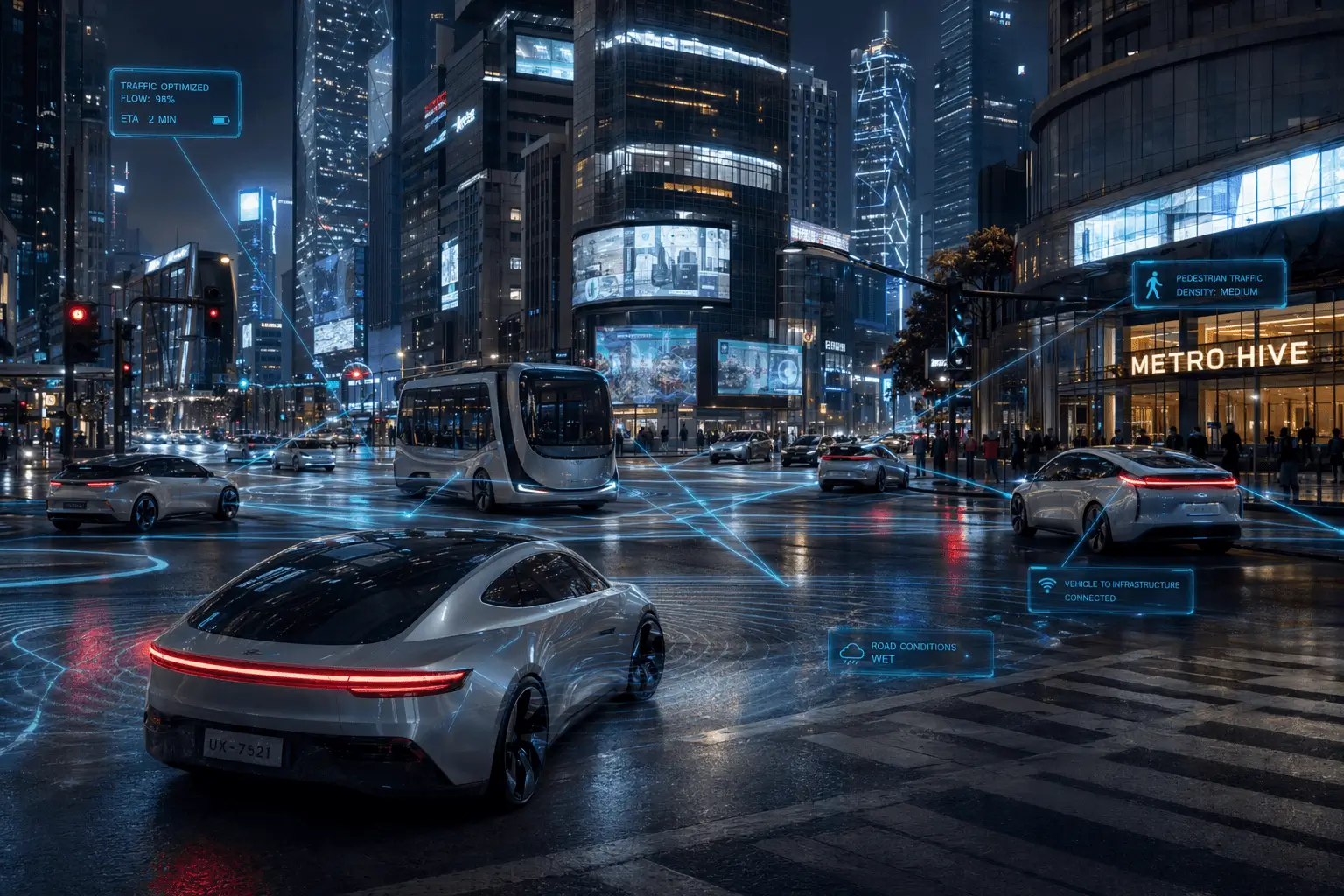
The promise of the autonomous vehicle (AV) is one of the most tantalizing visions of the 21st century. Proponents paint a picture of a utopian future: roads free of traffic jams, the eradication of human-error-caused fatalities, and a dramatic reduction in urban emissions. We are told that our commutes will soon be transformed into time for relaxation or productive work while our cars seamlessly navigate the chaos of the city.
However, the timeline for this driverless revolution has been notoriously difficult to pin down. A decade ago, industry leaders confidently predicted that fully autonomous vehicles would be ubiquitous by 2020. Today, while we have made astounding technological leaps, the widespread deployment of Level 5 autonomy (full driving automation in all conditions) remains elusive. The roadblock is no longer purely technological; it is a complex, deeply entrenched web of regulatory hurdles, infrastructural deficits, and shifting market readiness.
The Technological Reality Check
Before examining the regulatory landscape, we must honestly assess the state of the technology. Autonomous vehicles are essentially the physical manifestation of AI agents reshaping business; they are autonomous software systems designed to perceive, reason, and act in the physical world.
The 99% vs. The 1%
The challenge of autonomous driving is heavily skewed by the “edge cases.” Training an AI to drive on a sunny highway with clear lane markings is relatively straightforward; this accounts for 99% of driving. The difficulty lies in the remaining 1%.
How does a self-driving car handle a construction zone with contradictory hand signals from a worker? How does it interpret the erratic behavior of a cyclist in a blizzard? How does it make split-second ethical decisions when a collision is unavoidable? These edge cases require a level of generalized reasoning and contextual understanding that current AI models still struggle to achieve reliably.
The Sensor Suite Debate
The industry remains divided on the optimal hardware approach. Companies like Waymo rely heavily on LIDAR (Light Detection and Ranging) - spinning lasers that create highly accurate 3D maps of the environment. LIDAR is incredibly precise but historically very expensive and bulky.
Conversely, Tesla has famously championed a “vision-only” approach, relying entirely on high-resolution cameras and massive neural networks to interpret the visual data, arguing that humans drive using only two eyes and a brain. While vision-only systems are cheaper and easier to scale, critics argue they lack the necessary redundancy required for safety-critical systems in adverse weather conditions.
The Regulatory Labyrinth
Assuming the technology can perfect the final 1% of edge cases, the deployment of AVs faces a monumental regulatory bottleneck. Unlike a new software app, a self-driving car has the physical capacity to cause massive destruction if it fails. Consequently, regulators are moving with extreme caution.
The Patchwork of Local Laws
In the United States, the regulatory environment for autonomous vehicles is a chaotic patchwork. The National Highway Traffic Safety Administration (NHTSA) oversees the safety design of the vehicles themselves, but the actual operation of vehicles on public roads is governed by individual state and local laws.
This means a self-driving truck might be perfectly legal to operate autonomously in Texas but must suddenly hand control over to a human driver the moment it crosses the border into New Mexico. This fragmented landscape makes it incredibly difficult for AV companies to scale their operations nationally. A unified, federal regulatory framework is desperately needed, but political gridlock and varying regional attitudes toward safety make this a slow process.
Liability and Insurance
One of the most complex regulatory and business hurdles is determining liability. When a human driver crashes a car, the legal and insurance frameworks for assigning blame are well-established. But who is at fault when a fully autonomous vehicle crashes?
Is it the “driver” sitting in the passenger seat who had no control? Is it the manufacturer who built the car? Is it the software developer who wrote the perception algorithm? Or is it the city that failed to maintain the road markings? The insurance industry is actively grappling with these questions, transitioning from individual liability policies to complex product liability models. Until these legal frameworks are solidified, the financial risk of deploying AV fleets at scale remains a significant deterrent.
Market Readiness: Robotaxis vs. Logistics
The rollout of autonomous vehicles is not happening uniformly across all sectors. The market readiness varies drastically depending on the specific use case.
The Slow Grind of Urban Robotaxis
The vision of hailing a driverless Uber anywhere, anytime is proving to be the most difficult to achieve. Companies like Waymo and Cruise have launched localized robotaxi services in cities like Phoenix and San Francisco. These programs operate in tightly geofenced areas, heavily mapped, and often only in favorable weather conditions.
While these deployments are impressive technical achievements, scaling them globally requires mapping every inch of every city and dealing with infinite municipal edge cases. Public perception also remains a hurdle; highly publicized incidents involving robotaxis stopping abruptly or blocking emergency vehicles have led to local pushback and regulatory scrutiny.
The Fast Track: Highway Logistics and Supply Chains
In contrast, the application of autonomy in commercial logistics is advancing rapidly. Highway driving, while operating at higher speeds, is a much more structured and predictable environment than a chaotic city center.
Autonomous trucking is poised to revolutionize the movement of freight. It directly integrates into the technological upgrades we are seeing across the industry, such as how supply chain logistics are being revolutionized by blockchain. An autonomous truck doesn’t need to sleep, isn’t constrained by hours-of-service regulations, and can drive with optimized fuel efficiency.
We are already seeing “hub-to-hub” autonomous trucking deployments, where human drivers navigate the complex local roads to get the trailer to a highway transfer hub. From there, the autonomous system takes over for the long-haul highway stretch, before handing it back to a local human driver at the destination hub. This model sidesteps the most complex urban edge cases while unlocking massive economic efficiencies for the supply chain.
Conclusion: A Marathon, Not a Sprint
The autonomous vehicle revolution is inevitable, but it will not arrive overnight as a single, dramatic flip of a switch. It is a slow, iterative process of technological refinement and regulatory adaptation.
For the next decade, we will likely see a phased integration. Advanced Driver Assistance Systems (ADAS) will continue to improve, handling more highway driving tasks while still requiring human supervision. Fully autonomous operations will expand in highly constrained environments: specific highway routes, closed campus environments, and geofenced urban zones.
The ultimate vision of Level 5 autonomy - where a car has no steering wheel and can drive anywhere a human can - requires not just perfect AI, but a modernized infrastructure and a harmonized legal framework. The technology is racing ahead, but it must wait for society and government to pave the regulatory roads it needs to drive on.