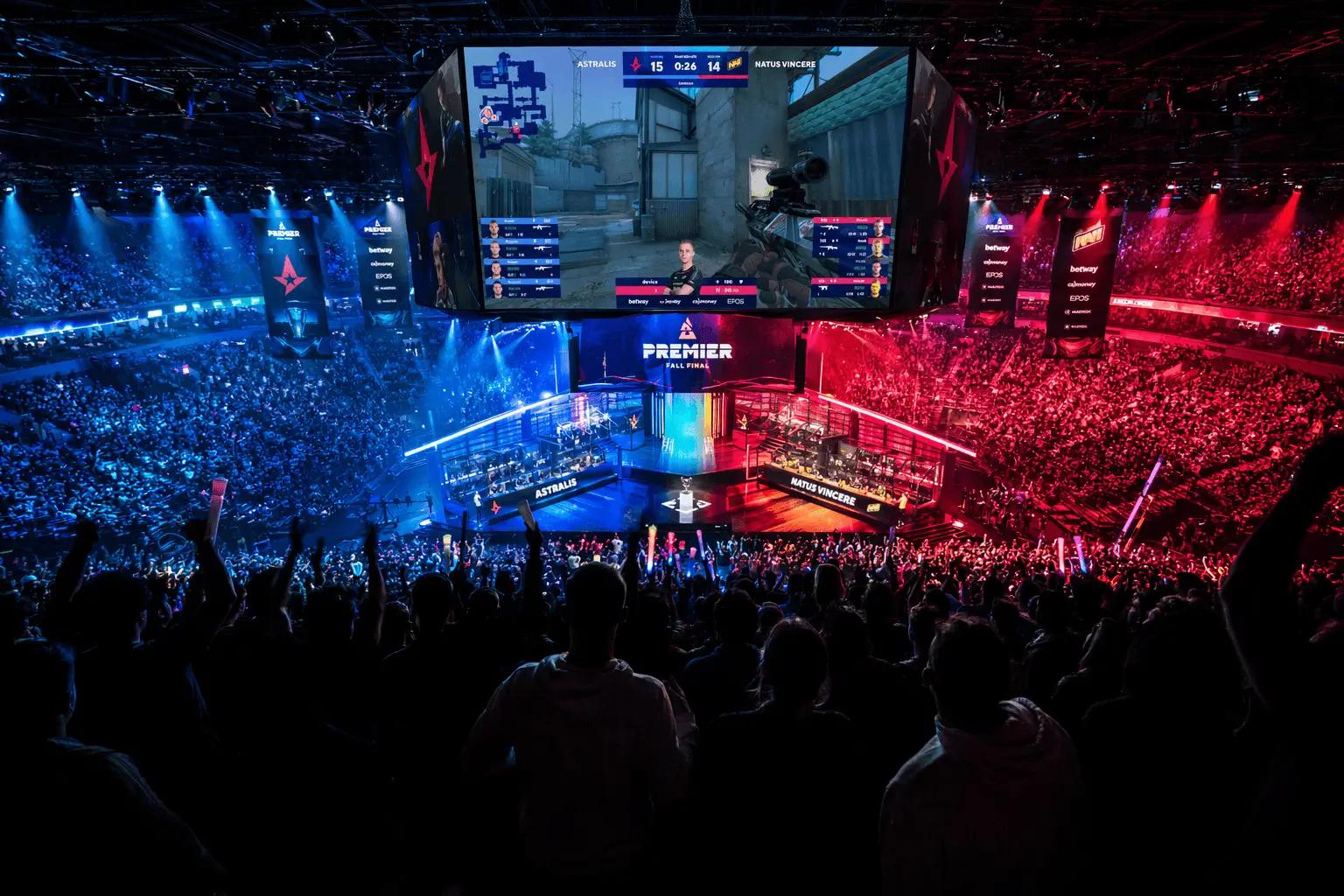
For decades, traditional sports like football, basketball, and soccer held an absolute monopoly on global entertainment viewing hours. The business model was simple and immensely profitable: build a stadium, sell tickets, sign massive broadcast rights deals with television networks, and secure corporate sponsorships.
However, over the last ten years, a parallel entertainment ecosystem has emerged, one that operates primarily in the digital realm and commands the rabid attention of a highly coveted demographic: E-sports. Competitive video gaming has transitioned from dimly lit LAN parties in the late 1990s to sold-out arenas, multi-million dollar prize pools, and publicly traded franchise teams.
Yet, beneath the massive viewership numbers and the hype of celebrity gamers, the business of e-sports is surprisingly fragile. In this deep dive, we will explore the unique financial architecture of e-sports, the delicate power dynamics between game publishers and franchise teams, the intersection with the broader creator economy, and the industry’s desperate search for sustainable profitability.
The Viewership Explosion and the Demographic Shift
The foundational pillar of the e-sports industry is its audience. According to industry analytics, global e-sports viewership has surpassed 500 million people annually. This audience is distinct from traditional sports viewership; it is incredibly young, highly engaged, digitally native, and notoriously difficult for traditional advertisers to reach through conventional television commercials.
The Power of the Platform
Unlike traditional sports, which relied on legacy television networks for distribution, e-sports was born on the internet. Platforms like Twitch and YouTube Gaming provided the friction-free, globally accessible distribution channels required for the industry to scale.
This digital distribution means that e-sports is inherently global. A teenager in Seoul, a college student in Berlin, and a professional in Los Angeles can all watch the exact same tournament in real-time, interacting with each other via live chat. This global, simultaneous reach is a dream for international brands looking to build cultural relevance among Gen Z and Millennials.
The Creator Economy Overlap
E-sports does not exist in a vacuum; it is deeply intertwined with the financial ecosystem of the creator economy. Most professional e-sports athletes are also individual content creators. They stream their practice sessions, build massive personal brands on social media, and monetize their audiences through subscriptions and direct donations.
This dual-revenue stream is crucial because, as we will explore, simply playing for an e-sports team is rarely lucrative enough to sustain a career in the long term, save for the very top tier of players. The most successful e-sports organizations (like FaZe Clan or 100 Thieves) recognize this and operate more like digital lifestyle brands and talent management agencies than traditional sports franchises.
The Architecture of E-Sports: Who Holds the Power?
The fundamental difference between traditional sports and e-sports lies in intellectual property (IP). No one “owns” the game of basketball. Anyone can buy a ball, set up a hoop, and organize a tournament.
In e-sports, the “field” is a proprietary piece of software owned by a multi-billion dollar corporation. This single fact dictates the entire economic structure of the industry.
The Game Publishers as Ultimate Arbiters
Game publishers like Riot Games (creator of League of Legends), Valve (creator of Counter-Strike and Dota 2), and Activision Blizzard hold absolute power. They own the IP. They dictate the rules, balance the gameplay, and possess the legal right to shut down any tournament they do not explicitly approve.
For the publishers, e-sports is essentially a massive, highly effective marketing expense. A thriving competitive scene extends the lifespan of a video game by years, keeping the casual player base engaged and spending money on in-game microtransactions (like character skins). The publisher’s primary goal is not necessarily to make the e-sports league itself profitable, but to use the league to drive overall game revenue.
The Franchise Model
In an attempt to stabilize the ecosystem and attract traditional sports investors (like NFL owners and private equity firms), several publishers adopted a franchised league model. For example, the League of Legends Championship Series (LCS) required teams to pay a massive buy-in fee (often around $10 million) for a permanent spot in the league.
This model promised revenue sharing from broadcasting rights and sponsorships, eliminating the risk of a team being “relegated” (kicked out of the league for poor performance), which historically made investing in e-sports teams incredibly risky.
The Profitability Crisis: Where is the Money?
Despite the franchised models and the massive viewership numbers, the harsh reality of e-sports in the mid-2020s is that very few organizations are actually turning a profit. The industry is currently facing a “winter” of consolidation and layoffs.
The Monetization Gap
The core problem is the “monetization gap.” Traditional sports generate massive revenue per fan. An NFL fan might buy a $150 ticket, a $100 jersey, and a $10 beer, while the league extracts hundreds of millions from the TV networks they watch on.
An e-sports fan, conversely, is used to watching content entirely for free on Twitch. They are highly resistant to paywalls. While they might buy a digital skin in the game (which primarily benefits the publisher, not the team), extracting direct, recurring revenue from the e-sports audience has proven incredibly difficult.
The Bubble in Player Salaries
As venture capital flooded into the space in the late 2010s, e-sports organizations engaged in a massive arms race for talent. Player salaries skyrocketed, often reaching high six-figure or even seven-figure sums for top talent.
This created an unsustainable financial dynamic. The revenue generated by sponsorships and tournament winnings was simply not enough to cover the massive overhead of player salaries, massive gaming team houses, and content production staff. The industry essentially operated on the assumption that media rights deals (selling the broadcast to a platform like YouTube) would eventually bail them out, an assumption that largely proved false.
The Path Forward: Diversification and New Tech
To survive and eventually achieve sustainable profitability, the e-sports industry is undergoing a painful but necessary restructuring.
Diversifying Revenue Streams
Successful e-sports organizations are aggressively diversifying away from pure competitive gaming. They are leveraging their cultural cachet to sell high-margin physical merchandise, collaborating with major fashion brands. They are developing their own proprietary software tools for gamers. They are even moving into game development themselves. The goal is to build a resilient, diversified media brand where the e-sports team serves as the “halo” marketing vehicle, rather than the sole profit center.
Integrating Next-Gen Technology
The viewing experience is also ripe for innovation. As we noted in our analysis of Augmented Reality (AR) in retail, spatial computing offers incredible new ways to interact with digital content.
The future of e-sports viewership may involve fans wearing AR headsets to watch a match unfold on a holographic map projected onto their living room table, with real-time stats hovering over the players’ avatars. Furthermore, the integration of blockchain technology and Web3 concepts (like verifiable digital collectibles tied to specific tournament moments) offers potential new, high-margin revenue streams that bypass traditional advertising constraints.
Conclusion: A Maturing Ecosystem
The e-sports industry is currently emerging from its “Wild West” phase. The era of irrational exuberance, where venture capital funded unsustainable business models based purely on viewer counts, is over.
The ecosystem is maturing into a more disciplined, albeit leaner, industry. The underlying fundamentals - a massive, global, highly engaged audience playing and watching competitive gaming - remain stronger than ever. The challenge for the next decade is not capturing attention; it is building the financial architecture required to monetize that attention sustainably, navigating the delicate power dynamic with game publishers, and continuing to pioneer the future of digital-first entertainment.