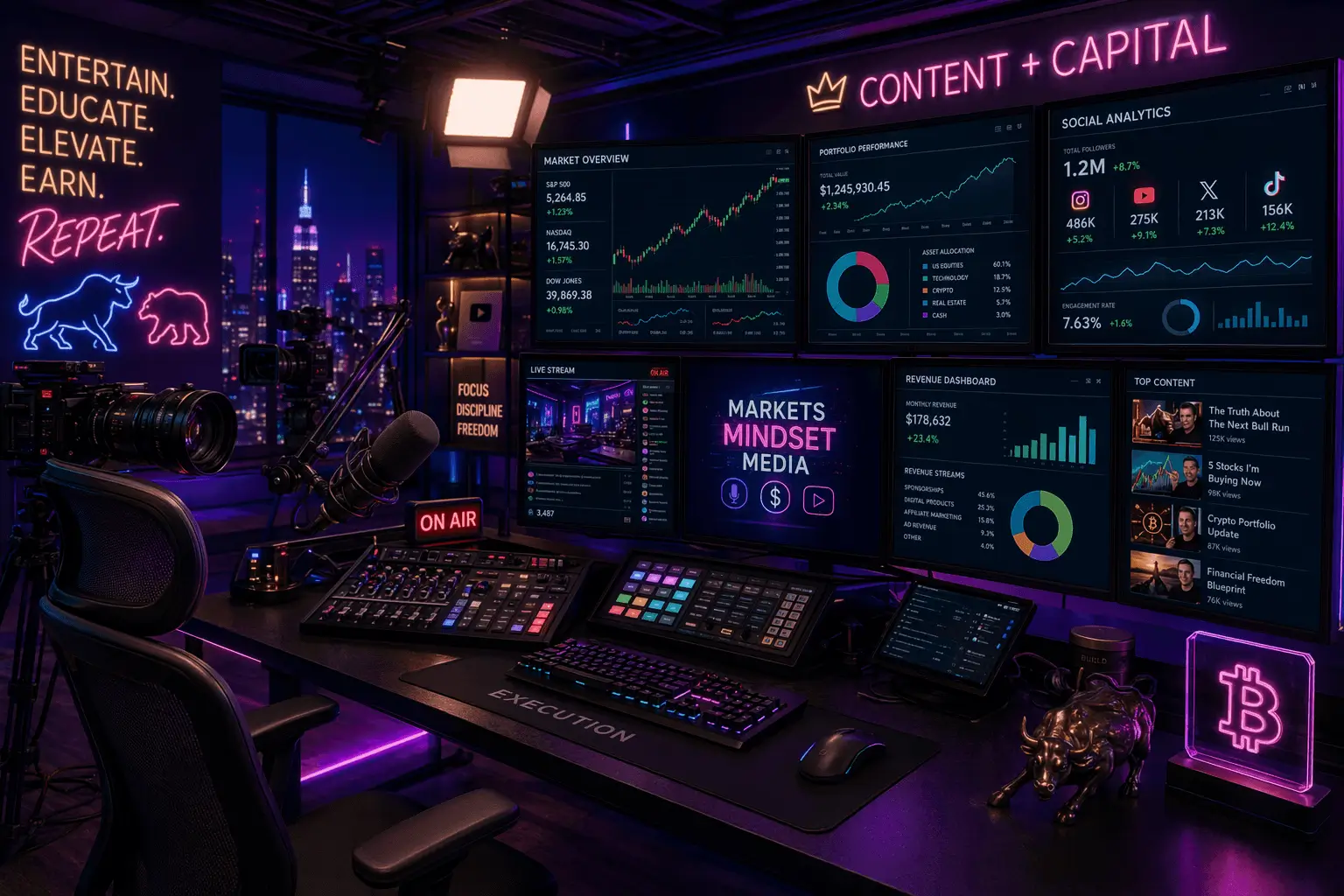
For the better part of a century, the media landscape was dominated by a few massive gatekeepers. Television networks, movie studios, and publishing houses held the keys to distribution, dictating who got to create content and, more importantly, who got paid for it. Today, that model has been completely inverted. We are living in the golden age of the “Creator Economy,” a rapidly expanding financial ecosystem where individual content creators bypass traditional gatekeepers to build direct, monetizable relationships with their audiences.
What started a decade ago with amateur vloggers and gaming streamers has matured into a sophisticated, multi-billion-dollar industry. The creator economy is no longer just a cultural phenomenon; it is a profound macroeconomic force that is reshaping employment, advertising, and even traditional banking. Much like how the future of remote work decentralized the traditional office, the creator economy has decentralized the traditional media corporation.
Defining the Creator Economy
To understand the financial implications, we must first define what the creator economy actually is. It encompasses anyone who builds an audience online and monetizes that audience. This includes YouTubers, podcasters, Substack writers, Twitch streamers, TikTok influencers, and independent course creators.
The Shift from Renting to Owning
In the early days of social media, creators were essentially sharecroppers. They built massive audiences on platforms like Facebook and Instagram, but the platforms captured nearly all the financial value through advertising. The creators “rented” their audience from the algorithm.
The modern creator economy is characterized by a shift toward ownership. Creators are utilizing platforms like Patreon, Substack, and OnlyFans to generate recurring subscription revenue directly from their fans. They are launching their own direct-to-consumer (DTC) product lines, creating paid communities, and leveraging their influence to secure massive equity deals with brands rather than settling for flat-fee sponsorships.
The Macroeconomic Scale
The financial scale of this ecosystem is staggering. According to a widely cited report by Goldman Sachs, the creator economy is projected to approach half a trillion dollars by 2027. This rapid growth is driven by several converging factors.
The Great Resignation and the Search for Autonomy
The psychological shift brought about by the global pandemic accelerated the desire for professional autonomy. Millions of people, disillusioned with the rigid structures of corporate employment, began exploring ways to monetize their passions and skills online. The creator economy offered a compelling alternative: the ability to dictate one’s own hours, be one’s own boss, and build equity in a personal brand.
The Unbundling of Media
Consumers are increasingly fragmenting their attention. Instead of watching a generic cable news broadcast, they prefer to subscribe to a niche political analyst on Substack or listen to a highly specialized economics podcast. This “unbundling” of media means that creators do not need an audience of millions to be financially successful. The concept of “1,000 True Fans” - the idea that a creator only needs a small, highly dedicated group of paying supporters to make a living - has become a viable financial model.
Financial Innovation for Creators
As creators transition from hobbyists to small-to-medium businesses (SMBs), they face unique financial challenges that traditional institutions are ill-equipped to handle. This friction has spawned a massive wave of financial innovation tailored specifically for the creator class.
The Problem with Traditional Banking
If a YouTuber earning $500,000 a year walks into a legacy bank to apply for a mortgage or a business loan, they are often rejected. Traditional banks rely on predictable W-2 income and standard business models to assess creditworthiness. They struggle to underwrite the volatile, multi-platform revenue streams of a digital creator. An underwriter doesn’t know how to value a YouTube channel’s back catalog or a Twitch streamer’s subscription revenue.
The Rise of Creator-Focused Fintech
To fill this void, a new breed of fintech startups has emerged. Companies like Karat Financial are building corporate cards and lending products specifically for creators, underwriting them based on their social metrics and platform revenue rather than traditional credit scores. Other platforms are offering “creator financing,” providing upfront cash in exchange for a percentage of a creator’s future YouTube AdSense revenue.
This financial infrastructure is critical. It allows creators to hire editors, build studios, and launch products without having to bootstrap everything themselves, accelerating the professionalization of the industry.
Tokenization and Web3 Integration
Perhaps the most radical financial implication of the creator economy is its intersection with Web3 and cryptocurrency. Creators are inherently seeking ways to bypass intermediaries and capture more of the value they generate - a core ethos of Decentralized Finance (DeFi).
Social Tokens and Creator Equity
We are beginning to see the rise of “social tokens” - cryptocurrencies launched by individual creators or communities. A creator can issue a token to their audience, granting token holders exclusive access to content, private Discord servers, or even voting rights on future creative decisions.
More profoundly, social tokens represent a way to securitize a creator’s brand. Early supporters who buy the token are essentially buying equity in the creator’s future success. If the creator becomes wildly popular, the demand for the token increases, driving up its value and financially rewarding the early fans who helped them get there. This fundamentally alters the dynamic between creator and audience, turning fans into active, financially incentivized stakeholders.
NFTs as Digital Merchandise
While the speculative frenzy surrounding Non-Fungible Tokens (NFTs) has cooled, the underlying technology remains highly relevant for creators. NFTs serve as verifiable digital merchandise. A musician can release a limited edition album as an NFT, or an artist can sell digital prints directly to collectors.
Crucially, smart contracts embedded within NFTs can ensure that the original creator receives a royalty percentage every time the asset is resold on the secondary market. This provides an ongoing revenue stream that was previously impossible in the physical art and media markets.
The Risks and the Middle-Class Squeeze
Despite the immense opportunities, the creator economy is not a utopian landscape. It is highly stratified, and the financial realities for the vast majority of participants are sobering.
The Power Law Dynamics
The creator economy operates on an extreme power law curve. A tiny fraction of creators at the very top of the pyramid - the MrBeasts and Joe Rogans of the world - capture the vast majority of the revenue and audience attention. Meanwhile, millions of creators at the bottom struggle to make minimum wage.
Unlike traditional employment, which typically features a large middle class, the creator economy currently lacks a robust middle tier. You are either a highly lucrative media empire or you are a struggling hobbyist. Building a sustainable “middle-class” creator ecosystem is the industry’s most pressing challenge.
Algorithmic Vulnerability
Furthermore, creators face an ever-present existential threat: algorithmic volatility. A creator might spend years building a massive audience on a platform like TikTok, only to have a sudden, opaque change in the algorithm decimate their view counts overnight. This lack of control over distribution is terrifying from a business perspective. It is the primary reason successful creators obsessively attempt to move their audiences off rented algorithms and onto owned platforms, like email newsletters or private websites.
Conclusion: The Ultimate Decentralization
The rise of the creator economy is the ultimate manifestation of the internet’s democratizing power. The tools of production and distribution are now universally accessible, allowing anyone with a smartphone and a compelling point of view to compete with legacy media corporations.
From a financial perspective, this represents a massive reallocation of capital. Advertising dollars are flowing away from television networks and toward individual influencers. New fintech ecosystems are being built to underwrite a completely new asset class. And Web3 technologies are offering radical new ways for creators to securitize their personal brands.
The creator economy is still in its adolescence. It is messy, volatile, and highly unequal. But the fundamental shift has already occurred. The future of media and entertainment will not be dictated by a handful of executives in boardrooms; it will be driven by millions of independent creators, armed with digital tools and directly funded by their communities.