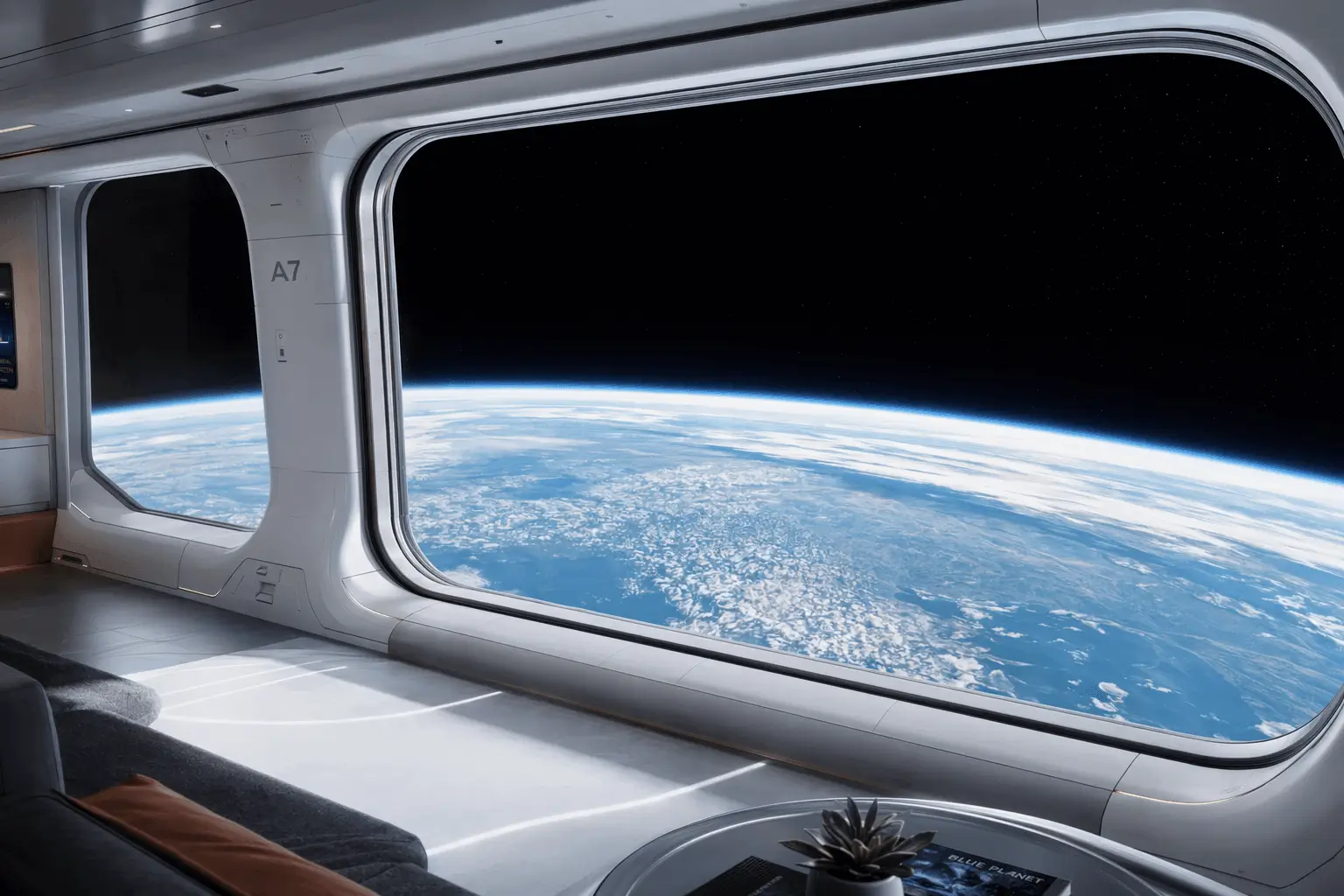
For decades, the concept of leaving Earth’s atmosphere was strictly the domain of highly trained government astronauts. Today, the space tourism industry is no longer confined to the pages of science fiction. Instead, it is a burgeoning, multi-billion dollar sector characterized by intense competition, rapid technological advancement, and a clientele composed of the world’s wealthiest individuals. Yet, despite the successful suborbital flights of companies like Virgin Galactic and Blue Origin, and the orbital missions facilitated by SpaceX, a fundamental question remains: Is the economics of space tourism truly viable in the long term, or is it merely an expensive vanity project destined to remain a niche market?
To understand the financial realities of this nascent industry, we must look beyond the spectacle of billionaire founders launching themselves into the thermosphere. We need to dissect the underlying cost structures, evaluate the addressable market, analyze the regulatory and insurance landscapes, and consider how space tourism fits into the broader vision of a cislunar economy.
The Staggering Cost of Leaving Earth
The primary barrier to entry for both providers and consumers of space tourism is the exorbitant cost of overcoming Earth’s gravity. The physics of spaceflight demand immense amounts of energy, specialized materials, and rigorous safety protocols, all of which translate to astronomical financial requirements.
The Problem with Expendability
Historically, space launch systems were expendable. Rockets were built, launched, and either burned up in the atmosphere or crashed into the ocean. This model is akin to building a Boeing 747 for a single flight from New York to London and then discarding it. The economic inefficiency of expendable rockets made space access prohibitively expensive, costing tens of thousands of dollars per kilogram to reach Low Earth Orbit (LEO).
The paradigm shifted significantly with the advent of reusability, championed largely by SpaceX’s Falcon 9 program. By recovering and refurbishing the first stage of the rocket, SpaceX drastically reduced the marginal cost of a launch. This innovation proved that reusability is the key to unlocking the economic potential of space. However, true airline-like operations - where a vehicle can fly multiple times a day with minimal maintenance - remain an elusive goal for orbital vehicles, keeping costs relatively high.
Suborbital vs. Orbital Economics
When discussing space tourism, it is crucial to distinguish between suborbital and orbital flights, as their economic models are vastly different.
Suborbital Flights: Companies like Virgin Galactic and Blue Origin offer suborbital experiences. These flights typically last a few hours, offering passengers a few minutes of weightlessness and a view of the Earth’s curvature before returning to the ground. The vehicles - SpaceShipTwo and New Shepard, respectively - are designed for rapid turnaround.
The economics of suborbital tourism hinge on volume. A ticket currently costs anywhere from $450,000 to well over a million dollars. To achieve profitability, these companies must transition from sporadic test flights to a regular, high-cadence commercial service. The upfront R&D costs run into the billions, meaning they need to fly thousands of passengers simply to break even. The viability of this model is predicated on the assumption that there is a deep enough pool of ultra-high-net-worth individuals willing to pay half a million dollars for a ten-minute thrill ride.
Orbital Flights: Orbital tourism, as facilitated by SpaceX’s Crew Dragon and potentially Boeing’s Starliner, is a vastly more complex and expensive undertaking. Achieving orbit requires significantly more velocity and energy, necessitating larger rockets and more robust thermal protection systems for reentry.
Missions like Inspiration4 or the private flights organized by Axiom Space to the International Space Station (ISS) cost tens of millions of dollars per seat. The market for orbital tourism is therefore significantly smaller than that for suborbital flights. The viability of orbital tourism relies less on volume and more on extracting maximum value per passenger, often bundling the experience with research opportunities or extensive training programs.
Sizing the Addressable Market
Who is buying tickets to space? The target demographic for space tourism is exclusively the global elite. According to wealth reports, there are roughly 400,000 ultra-high-net-worth individuals (UHNWIs) globally, defined as those with a net worth of $30 million or more.
The Elasticity of Demand
For a ticket price of $450,000, the addressable market is theoretically large enough to sustain suborbital operators for years, provided they can scale their operations. However, demand in this sector is highly sensitive to external factors.
First, the novelty factor must be considered. Once the initial backlog of wealthy enthusiasts is cleared, will demand wane? Second, safety is a paramount concern. A single catastrophic accident involving paying passengers could instantly freeze the market, causing demand to plummet and driving up insurance premiums to untenable levels.
For the industry to transition from a novelty to a sustainable business, prices must come down. This is the classic technological adoption curve: as technology matures and economies of scale are realized, costs decrease, opening the market to a broader segment of the population. If suborbital ticket prices can drop to the $50,000 range over the next two decades, the market size would expand exponentially, capturing the merely affluent alongside the ultra-wealthy.
The Big Three: Strategic Divergences
The space tourism market is currently dominated by three major players, each employing a distinct economic and technological strategy.
Virgin Galactic: The Experience Provider
Virgin Galactic, founded by Richard Branson, utilizes an air-launched spaceplane system. A carrier aircraft takes the spacecraft, SpaceShipTwo, to an altitude of roughly 50,000 feet before dropping it. The spacecraft’s rocket motor then ignites, propelling it to the edge of space.
Virgin Galactic’s economic model is heavily focused on the customer experience. They are selling not just a flight, but a multi-day luxury retreat at their Spaceport America facility in New Mexico. However, the company has faced significant technological delays and supply chain issues - often exacerbated by global tariff shifts and market impacts that affect aerospace manufacturing - pushing back their timeline for high-cadence commercial operations. Their financial viability depends on bringing their next-generation “Delta-class” spaceships online, which are designed for faster turnaround times and lower maintenance costs. Internal projections emphasize scaling these new classes to serve a much broader portion of the addressable market.
Blue Origin: The Infrastructure Builder
Jeff Bezos’s Blue Origin approaches space tourism as a stepping stone. Their New Shepard vehicle is a traditional vertical takeoff, vertical landing (VTVL) rocket capsule system. While they sell suborbital tickets, their broader strategic goal is to build the infrastructure necessary for millions of people to live and work in space.
Blue Origin benefits from the deep pockets of its founder, allowing it to absorb significant upfront costs and prioritize long-term technological development over short-term profitability. For Blue Origin, space tourism is partially a mechanism to test and refine their reusable rocket technology, which is being scaled up for their massive New Glenn orbital rocket. Their economic viability is insulated by Bezos’s wealth, giving them a longer runway to achieve profitability.
SpaceX: The Disruptor
Elon Musk’s SpaceX is the undisputed leader in commercial spaceflight, but they do not focus primarily on suborbital tourism. Instead, they facilitate orbital tourism as a secondary revenue stream alongside their core business of launching commercial satellites, fulfilling government contracts, and deploying the Starlink internet constellation.
SpaceX’s economic advantage is scale. Because they launch so frequently, their fixed costs are distributed across many missions. When they sell seats on a Crew Dragon capsule, the margins are highly favorable because the vehicle development and launch infrastructure have already been amortized through NASA contracts. Furthermore, their upcoming Starship vehicle promises to revolutionize the economics of space access, potentially carrying 100 passengers at a time to orbit or beyond, drastically reducing the cost per seat.
Regulatory and Insurance Hurdles
The economics of space tourism cannot be evaluated in a vacuum; they are heavily influenced by the regulatory environment and the insurance market. These aspects are pivotal in determining the risk profiles for space operators.
The Regulatory Landscape
In the United States, commercial spaceflight is regulated by the Federal Aviation Administration’s Office of Commercial Space Transportation (FAA-AST). Currently, the industry operates under a “learning period” or moratorium on certain safety regulations for passengers. This approach was designed to foster innovation by preventing heavy-handed regulations from stifling a nascent industry.
However, this moratorium is continually debated and will eventually expire. When it does, operators may face stringent new safety requirements, similar to those governing commercial aviation. Complying with these regulations could require expensive vehicle redesigns and more rigorous testing protocols, significantly increasing operational costs and impacting profitability. The ability of companies to adapt to these shifts will define their economic futures.
The Cost of Risk: Space Insurance
Space is inherently dangerous, and insuring a commercial spaceflight is a complex and expensive proposition. Space tourism companies must secure third-party liability insurance to cover potential damage to property or loss of life on the ground. However, insuring the passengers themselves - first-party liability - is still an evolving market.
Currently, passengers fly under an “informed consent” regime, acknowledging the extreme risks involved. As the industry scales, the demand for comprehensive passenger insurance will grow. If insurers deem the risks too high, premiums could become a substantial portion of the ticket price, further restricting the addressable market. A single accident would not only damage public perception but could also cause insurance markets to contract, making it financially difficult for companies to continue operating.
Beyond Tourism: The Catalyst for the Cislunar Economy
To view space tourism solely as an amusement ride for billionaires is to miss its broader economic significance. Space tourism acts as a catalyst, driving down the cost of access to space and funding the development of technologies that will underpin the future orbital economy. Without the financial injection provided by early adopters, advancing the infrastructure of low Earth orbit would stall.
Commercial Space Stations
The International Space Station is nearing the end of its operational lifespan, and NASA intends to transition its Low Earth Orbit operations to commercial space stations. Companies like Axiom Space, Blue Origin (with their Orbital Reef concept), and Voyager Space are developing private orbital habitats.
Space tourism is a critical component of the business model for these commercial stations. While they will host professional astronauts, researchers, and manufacturing facilities, tourists will provide a lucrative revenue stream to help offset the immense construction and operational costs. The viability of commercial space stations is intrinsically linked to the viability of orbital tourism.
Orbital Manufacturing and R&D
The microgravity environment offers unique advantages for manufacturing certain products, such as high-quality fiber optics, specialized pharmaceuticals, and advanced alloys. As launch costs decrease - driven in part by the economies of scale generated by the tourism sector - in-space manufacturing becomes economically feasible.
Furthermore, wealthy tourists may choose to fund scientific research during their trips, transforming from mere passengers into orbital patrons. Much like the disruption we see as AI agents reshape business, these developments promise new paradigms of investment. This intersection of tourism, research, and manufacturing creates a synergistic economic ecosystem in Low Earth Orbit. The boundaries between business, science, and leisure will continue to blur in space.
Conclusion: A Precarious but Promising Future
Is the economics of space tourism viable? The answer is a qualified yes, but it is a fragile viability dependent on several critical factors.
In the short term, suborbital operators face the daunting task of scaling their operations to achieve profitability before their capital reserves run dry. They must maintain a flawless safety record and navigate an uncertain regulatory future. Orbital tourism, while more lucrative on a per-seat basis, remains constrained by the astronomical costs of reaching LEO and the limited capacity of current vehicles.
However, the long-term economic outlook is highly promising. The relentless drive toward full and rapid reusability, spearheaded by companies like SpaceX, is fundamentally altering the cost equation. As launch costs plummet, the addressable market will expand, and the infrastructure of the orbital economy - commercial space stations, in-space manufacturing, and orbital logistics - will begin to take shape.
Space tourism is the tip of the spear. The billions of dollars currently being invested in launching wealthy individuals on brief excursions into the black are laying the foundation for a much larger, more diverse, and more sustainable cislunar economy. The current phase is an expensive and risky proving ground, but it is a necessary step toward humanity’s commercial expansion into the cosmos.