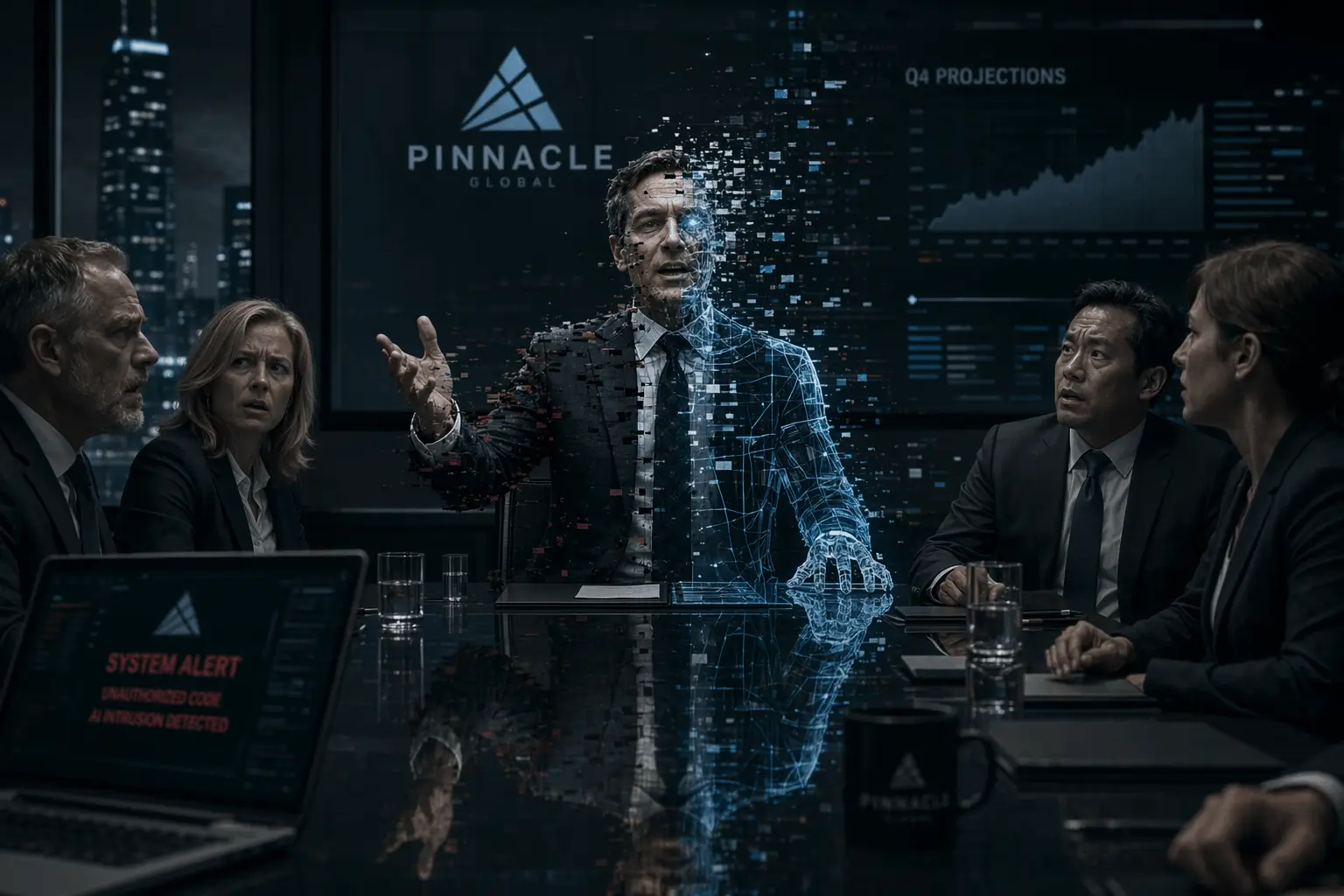
In 2024, a finance worker at a multinational corporation based in Hong Kong received a video call from the company’s Chief Financial Officer. The CFO, accompanied by several other familiar colleagues on the call, instructed the worker to urgently execute a series of confidential money transfers. Following protocol, the worker transferred $25 million.
It was a complete fabrication. The CFO was not real. The colleagues were not real. It was a highly sophisticated, real-time “deepfake” video conference. The worker had been interacting entirely with AI-generated avatars controlled by scammers.
For years, the primary concern surrounding deepfakes - highly realistic, AI-generated audio and video - has centered on the political sphere, specifically the threat of misinformation influencing democratic elections. However, as the underlying technology has become exponentially cheaper, faster, and more accessible, the threat vector has expanded. Deepfakes are no longer just a political problem; they are a catastrophic business risk. In this analysis, we will explore the mechanics of corporate deepfake fraud, the weaponization of misinformation against public brands, and the technological arms race to secure the concept of “truth” in the digital age.
The Evolution of the Scam: From Phishing to Vishing
To understand the severity of the deepfake threat, we must understand how it bypasses traditional cybersecurity defenses.
For the past twenty years, the primary vector for corporate fraud has been email “phishing” - sending a spoofed email pretending to be the CEO, asking an employee to wire funds or purchase gift cards. As employees became trained to spot grammatical errors and verify sender addresses, the success rate of simple phishing declined.
The Audio Deepfake (Vishing)
The scammers escalated to “vishing” (voice phishing). By scraping publicly available audio of a CEO (from earnings calls, podcast interviews, or YouTube videos), malicious actors use AI voice-cloning software to create a highly accurate synthetic voice model.
They then call a mid-level executive, type out a script in real-time, and the AI generates the CEO’s exact voice, complete with appropriate cadence and emotional inflection, ordering an urgent wire transfer. According to warnings issued by the FBI, these synthetic audio attacks are incredibly difficult for humans to detect, especially when executed under the guise of an urgent, high-pressure situation.
The Real-Time Video Deepfake
The Hong Kong heist represents the cutting edge of this fraud. Generating a real-time, interactive video deepfake requires significant computational power, often utilizing the same massive hardware infrastructure driving the race toward Artificial General Intelligence.
However, open-source AI models are advancing so rapidly that creating a convincing deepfake no longer requires a Hollywood special effects studio. A bad actor with a high-end gaming laptop and a few hours of target footage can create a real-time video filter that maps the target’s face and expressions onto their own. When a subordinate sees their boss’s face and hears their boss’s voice on a Zoom call, the human brain’s natural skepticism is almost entirely overridden.
Brand Destruction and Market Manipulation
While direct financial theft is the most tangible threat, the weaponization of deepfakes for market manipulation and brand destruction is arguably more dangerous to a company’s long-term valuation.
Algorithmic Trading and Synthetic News
Modern financial markets are highly automated. Algorithmic trading bots constantly scan news feeds and social media, executing trades in milliseconds based on keyword sentiment analysis.
Consider a scenario where a highly realistic deepfake video of a Fortune 500 CEO announcing a massive, unrecorded loss or a fatal product flaw is posted to social media. Before human analysts can verify the video’s authenticity, the trading algorithms react. They dump the stock, triggering a massive, automated sell-off that wipes billions of dollars off the company’s market capitalization in minutes. Even if the video is debunked an hour later, the financial damage - and the lasting damage to consumer confidence - is already done.
The World Economic Forum (WEF) consistently ranks AI-generated misinformation and disinformation as one of the most severe global risks facing the global economy over the next decade.
Extortion and Corporate Espionage
Deepfakes are also powerful tools for corporate extortion. Bad actors can create highly damaging, fabricated video or audio of a CEO making racist remarks or admitting to illegal accounting practices. They present this synthetic evidence to the company’s board, demanding a massive ransomware payment to prevent its release to the press.
Furthermore, as we rely more heavily on autonomous AI agents to manage corporate workflows and customer interactions, malicious actors can use synthetic audio to bypass voice-biometric security systems, accessing proprietary customer data or trade secrets.
The Defense: Technological and Cultural Solutions
Combating the deepfake threat requires a multi-layered approach, combining new technological defenses with a fundamental shift in corporate culture.
The “Zero Trust” Verification Model
The foundational defense is cultural. Corporations must implement a “Zero Trust” architecture for all financial transactions and sensitive data transfers.
The era of trusting a request simply because you recognize the face or voice on the screen is over. Companies must institute mandatory, out-of-band verification protocols. If a CFO requests a $5 million wire transfer via a video call, the protocol must require the employee to hang up, open a separate, secure internal messaging app, and require the CFO to authenticate the request using a physical security key or a multi-factor authentication code. The friction of verification must outweigh the pressure of urgency.
AI Fighting AI: Detection Algorithms
On the technological front, a massive arms race is underway. Cybersecurity firms are developing advanced AI models specifically designed to detect deepfakes.
These models analyze videos for microscopic inconsistencies invisible to the human eye: a pulse rate that doesn’t match the speaker’s breathing, unnatural lighting reflections in the corneas, or audio frequencies that indicate synthetic generation. However, this is a perpetual game of cat-and-mouse. Every time a detection algorithm identifies a flaw in a deepfake model, the creators of the deepfake model use that feedback to train the next iteration to be even more flawless.
Cryptographic Provenance (C2PA)
The most promising long-term solution is not detection, but cryptographic provenance. Organizations like the Coalition for Content Provenance and Authenticity (C2PA) are developing open standards to embed cryptographic metadata directly into the hardware of cameras and microphones.
When a genuine photo or video is recorded, it is cryptographically signed, creating an immutable “digital paper trail” detailing exactly when, where, and how the media was created. When a user views the video online, their browser verifies the signature. If a video lacks this cryptographic “seal of authenticity,” the platform automatically flags it as potentially synthetic or altered.
Conclusion: The Death of Digital Trust
The proliferation of hyper-realistic deepfakes marks the end of implicit digital trust. We have spent the last thirty years building an internet based on the assumption that seeing is believing. That assumption is now a critical vulnerability.
For business leaders, the threat of AI-generated misinformation must be treated with the same severity as a massive data breach or a physical supply chain disruption. It requires immediate board-level attention, comprehensive employee training, and significant investment in cryptographic verification tools. The companies that fail to adapt their security protocols to the reality of synthetic media will find themselves defenseless against the most sophisticated fraud campaigns in human history.